
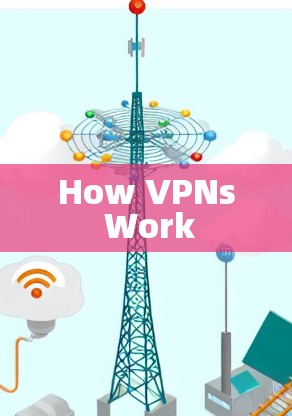
How VPNs Work
VPNs, or Virtual Private Networks, are internet security tools that allow users to access the internet without being blocked by their own network. They are essential in scenarios where the user's own internet is unreliable or compromised. Here's a structured overview of how VPNs work, their types, encryption, tunneling, and their role in internet security:
-
Tunneling:
Tunneling is the process of sending data through a network. VPNs use tunneling to connect to a private network (e.g., the VPN server) and send data over a public network (e.g., the Internet).
-
Encryption:
Encryption is used to secure data within the VPN. It protects the data at rest (on the server) and in transit (through tunneling). Common encryption methods include symmetric (e.g., AES) and asymmetric (e.g., RSA) encryption.
-
Key Exchange:
VPNs use key exchange protocols like Diffie-Hellman or Tor's protocol to securely exchange encryption keys between the VPN server and the user's device.
Types of VPNs
-
OpenVPN:
A general-purpose VPN offering various protocols (HTTP, HTTPS, MP4, etc.).
-
Tor (The Onion):
A decentralized VPN using a public key infrastructure (PKI) with Tor's protocol, providing anonymity and privacy.
-
V2K (V2 for Key Exchange):
Focuses on secure key exchange using Diffie-Hellman, offering end-to-end encryption.
-
Snyk:
An open-source VPN that provides end-to-end encryption and is used by many organizations.
-
Kermit:
A commercial VPN offering advanced features like multi-site access.
-
V2KE:
Another open-source VPN offering advanced features like key exchange and encryption.
-
OpenSnyk:
A commercial VPN providing open-source tools and features.
Encryption Methods in VPNs
- Symmetric Encryption: Used for data at rest and in transit.
- Asymmetric Encryption: Used for key exchange and secure communication.
Tunneling Process
- Tunneling involves sending data through a public network (e.g., the Internet) to a private network on the VPN server.
- Tor, unlike other VPNs, uses a decentralized network with a single central node, providing anonymity.
Legal and Regulatory Aspects
- Terms of Service: Defined by the VPN provider, outlining usage limits and restrictions.
- Regulations: Varies by country and region, ensuring privacy and security.
- Abuse: Interception and decryption of data can compromise security, necessitating strict measures.
Conclusion
VPNs are crucial for internet security, offering tools like Tor for anonymity and end-to-end encryption. They differ from other VPNs by their protocols and network architectures, with Tor being notable for its decentralized design. Understanding VPN types, encryption, tunneling, and their legal implications is vital for effective internet security.
 54488220dd